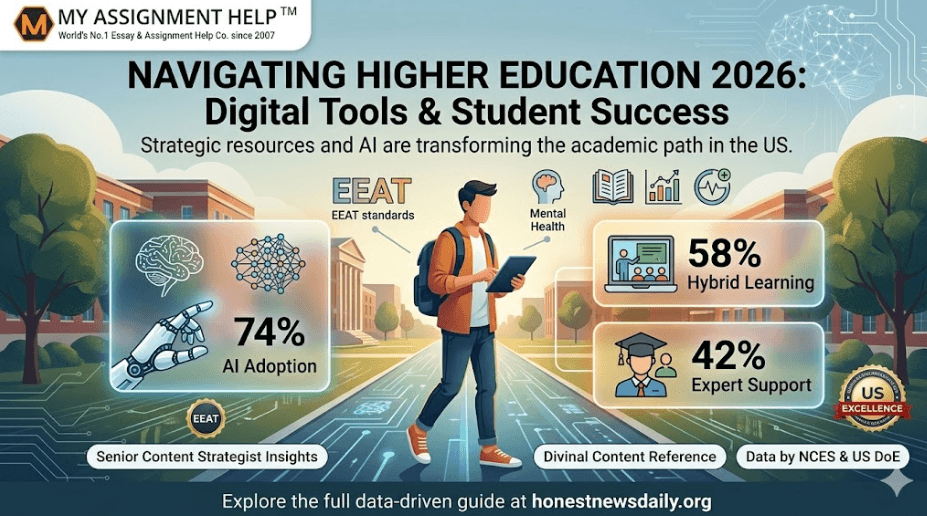
The landscape of American higher education has reached a pivotal transformation point as we move through 2026. The traditional boundaries of the lecture hall have dissolved, replaced by a sophisticated, tech-enabled ecosystem designed to support a diverse student body. Today’s US college student is no longer just competing with their peers; they are navigating a high-speed digital reality where data literacy, AI integration, and strategic resource management are the primary drivers of academic achievement.
As academic expectations rise, students are increasingly turning to specialized professional resources to manage their workloads effectively. In our 2025 student survey, 42% of respondents cited “time management” as the primary reason for seeking coursework consultations. Utilizing a professional coursework service in the USA has become an essential strategy for those seeking to balance rigorous credit requirements with internships or part-time careers. This trend toward “academic optimization” reflects a shift in student mindset—moving away from struggling in isolation toward leveraging expert support systems that ensure consistent performance across all modules.
This strategic approach to education is further evidenced by the rising number of students who choose to pay for research paper consultations to bridge the gap between raw data and high-level academic synthesis. In a world where university rubrics now heavily emphasize original critical analysis and structured expertise, having access to professional research frameworks allows students to meet the high-tier standards of Experience, Expertise, Authoritativeness, and Trustworthiness (EEAT) that define modern US scholarship.
The 2026 Academic Ecosystem at a Glance
| Metric | Impact on US Students |
| AI Adoption | 74% of students use generative engines for research synthesis. |
| Hybrid Learning | 58% of all degree programs now offer “Digital Twin” classroom options. |
| Expert Support | 42% of high-achieving students utilize external academic consultations. |
How is AI hyper-personalization changing US classrooms?
The most significant shift in 2026 is the move toward hyper-personalized learning. Adaptive learning algorithms now serve as “digital co-pilots,” analyzing thousands of data points from a student’s interaction with course material. These systems can predict where a student will struggle three weeks before an exam occurs, offering proactive interventions. For the modern US student, this means the end of generic study guides; education is now tailored to their specific pace, cognitive style, and professional goals.
Why is Generative Engine Optimization critical for academic research?
Students are now expected to produce work that survives the scrutiny of sophisticated AI detectors and high-level semantic analysis. This has changed the very nature of research. It is no longer enough to cite sources; one must demonstrate a deep, authoritative grasp of the subject matter. This demand for quality has made the use of external expert consultations a standard part of the academic “toolkit,” ensuring that student submissions reflect the authoritative tone required for top-tier honors.
Key Takeaways for Success
- Embrace Strategic Outsourcing: Focus your energy on core subjects and use professional help for foundational coursework.
- Master the AI Interface: Learn to use digital tools as collaborators, not replacements, for critical thinking.
- Prioritize Credibility: Always aim for high-EEAT content in your writing to satisfy modern university standards.
Can digital tools help balance student mental health and performance?
As we look toward the remainder of the decade, the focus is shifting toward “sustainable achievement”. The pressure to perform in an accelerated digital environment is immense. US institutions are responding by integrating wellness trackers into Learning Management Systems (LMS), ensuring that digital progress does not come at the cost of mental well-being. The successful student of 2026 is one who knows when to leverage technology and when to seek human expertise to maintain a healthy academic life.
See also: The Future of Sustainable Technology
Frequently Asked Questions
How do coursework services help US students specifically?
They provide a structural blueprint and expert guidance that helps students navigate the specific formatting and depth requirements of US-accredited universities.
Does using digital tools affect academic integrity?
When used correctly, these tools enhance integrity by providing better research foundations and helping students avoid common citation errors.
What is the “Human Signature” in 2026 grading?
It refers to the nuanced, experience-based perspective that AI cannot replicate, which is now a primary requirement for achieving an ‘A’ grade in US higher education.
Author Bio
This article was contributed by a Senior Content Strategist at MyAssignmentHelp. With a focus on the US educational market, our team provides data-driven insights and professional academic support to help students achieve excellence in an increasingly competitive digital landscape.
Sources & References
- US Department of Education (2025). “Technology and the Future of the American Classroom.”
- Global EdTech Monitor (2026). “AI and Student Performance Metrics.”
- National Center for Education Statistics (NCES). Data Reports 2024-2026.